The Disappearance of Ethics
This article is an excerpt transcribed from an interview recorded for a CMDA Matters podcast episode released in September 2024 with CMDA CEO Mike Chupp, MD, FACS; CMDA Senior Vice President of Bioethics and Public Policy Jeff Barrows, DO, MA (Ethics); and Stephen Grcevich, MD. During the conversation, they discussed mental health and the church, as well as how mental health relates to gender and identity. To listen to the full episode, visit cmda.org/cmdamatters.
by John Patrick, MD
The John Patrick Bioethics Column
“People say Gen Z follow these new faiths [namely social justice, climate activism and other urgent progressive causes] because we crave belonging and connection, but what if we also crave commandments? What if we are desperate to be delivered from something? To be at the mercy of something? I think we underestimate how hard it is for young people today to feel their way through life without moral guardrails and guidance, to follow the whims and wishes of our own ego and be affirmed by adults every step of the way. I am not sure that’s actual freedom. And if it is, I am not sure freedom is what any of us actually wants.” This is Freya India writing about a world in which no unchallengeable moral foundations are apparent and quoted in First Things.[1]
In the same edition of First Things, James Orr begins a glowing review of Oliver O’Donovan’s Gifford Lectures on “The Disappearance of Ethics” with an ironic comment on the most powerful company in the world, Google, which began its existence by declaring a fundamental commitment: “Don’t Be Evil.” Ten years later, they realized it was a recipe for total corporate paralysis and quietly retired it.[2] Why? Modern multicultural societies have bought into identity politics with victimhood being the trump card: no agreement on public good is possible between Jews and Christians, and all the others—Muslims, Hindus, Buddhists and secular atheists. Our ruling elites cannot agree on a foundational morality, so they try to pretend it doesn’t matter. More on this in a moment.
First, a little history on medical ethics as a curricular course in medical school. Its history is short, less than 50 years, despite the fact that the most famous foundational medical document, the Hippocratic Oath, begins with the invocation of transcendence (the gods) and proceeds to a statement of moral principles.
When our medical school started an ethics course because of undeniable bad behavior, cheating, etc., I commented to the dean at a cocktail party that such a course might produce some physicians who were amateur ethicists, but I doubted it would improve ethics amongst physicians. The dean was a liberal gentleman committed to the core liberal error —the idea that all problems were ultimately problems of ignorance and therefore correctable by education. He was appalled at my comment but also curious. I pointed out the most trustworthy people I knew would not even be able to define the word ethics, but I knew ethicists who acknowledged they only taught ethics; they did not practice them. (As it happened, the philosopher the dean put in charge of our course left precipitously when his habit of sleeping with his graduate students became public. He continued to be part of the committee that evaluates the quality of ethics programs in medical schools.) When the dean asked what I would do, I said the students are beyond the reach of ordinary mortals like you and me, but they have not read the great novelists who might stop them in their tracks, like Dostoevsky. I knew no one in that year’s student group had read him, and so I found myself starting a reading group. (The most immediately powerful text was the chapter bearing the same title as the book, Fidelity, by Wendell Berry, and it should be read by every medical student.)
I was soon banished from our school’s ethics course for the usual reasons, even though a group of students followed me out after a lecture, preferring to spend the time arguing with me rather than endure another politically correct lecture.
For most students, if they remember anything from their ethics course, it will be the Georgetown Mantra—autonomy, justice, beneficence and non-maleficence. I have yet to meet a group of students who have been taught these four concepts are not all equally important and certainly not the same in all cultures. Furthermore, the trump card in most cultures, group loyalty, is not even included. Are they all equally important? Commonly, when asked to rank order them, most students used to say autonomy is the most important, which is not logically correct. (I leave you to work out why because you will then remember it.) Today’s educational establishment is thereby trapped in a conundrum. They want equal outcomes within a multicultural dogma! I hope this paragraph is sufficiently difficult for some of you to write to me.
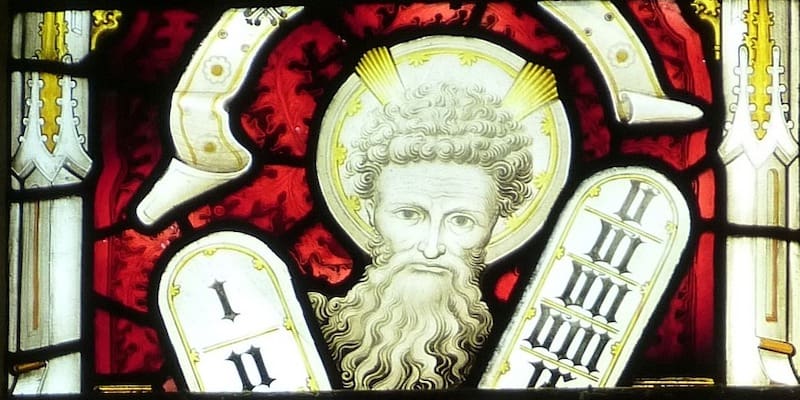
When God gave the children of Israel the Law, He began by reminding them they were dependent on His grace to get out of Egypt and then He lists 10 practices He will not tolerate. If they keep the law they will flourish; if not, they will lose their land and become slaves. Given our fallen nature, grace turns out to be continuously necessary. The Torah teaches but it does not cleanse our souls; rather, it shows the need for something more—a Savior, because our problem is not moral ignorance but willful denial of the obvious conclusion. The writer of the first paragraph is inching toward this glorious conclusion. Quite a few intellectuals are on or have recently traveled on the same track, e.g. Tom Holland, Jordan Peterson, Paul Kingsnorth and Mary Harrington.
My comment to the dean was more intuitive than thought out, but I recently came across Wittgenstein’s provocative comment that ethics is not a science, and it cannot be taught. It is not reducible to knowledge as we understand it in science.
Here is the last paragraph of his lecture on ethics. He wrote,
“…I believe the tendency of all men who ever tried to write or talk ethics or religion was to run against the boundaries of language. This running against the walls of our cage is perfectly, absolutely hopeless. Ethics, so far as it springs from a desire to say something about the ultimate meaning of life, the absolute good, the absolute valuable, can be no science. What it says does not add to our knowledge in any sense. But it is a document of a tendency in the human mind which I personally cannot help respecting deeply and would not for my life ridicule it.”[3]
Jesus tells us more in John 7:17, “If any man’s will is to do His will, he shall know concerning the doctrine, whether it is from God or whether I speak on My own authority” (NKJV). As all of us hopefully know, when we read the Scripture seeking understanding, God can authenticate them in overwhelming ways for which there is no parallel in our professional lives. He also changes us in ways beyond our merely knowledge-based understanding.
I almost began this essay with the words, “Reach out for some good,” which Aristotle uses in the opening of the Nicomachean Ethics.[4] O’Donovan does start from that quote, but he gives the whole quotation, “All action, practice and aspiration reach out for some good.” He points out good must be there, or at least seem to be there, but in Christian ethics the good is often not taken for reality. When we lose the sense of immaterial good, we think of ourselves as just animals, but we are not. We are devastated by gossip, marital infidelity and misrepresentation, not to mention several teenage tantrums, most of which are rooted in the ill-understood developing ego. The fact of the conflict between the unmeasurable, immaterial realities of humanity like kindness, truth speaking and our own self-centeredness becomes apparent in very small children as C.S. Lewis notes in the opening of Mere Christianity.[5] In contrast, the animal world is a world of instinct. Robert Frost commented on the way we were failing to distinguish between humans and all other animals, something he could see would have disastrous consequences. More than 65 years ago, he wrote that our humor, conscientiousness and worship were being lost piecemeal to the animals under the table because of this intellectual error.[6] Humor is almost absent from university.
Healthcare today deals with the consequences of behavior all the while, but we have no shared allowed language providing a base for discussion. Good and evil are real and must be acknowledged. Augustine famously said God created all things, and so they are good. Evil is therefore the absence of God, which only man has the freedom to want and pretend he is not dependent on God. The solution to the problem is a new world, which began on the first Easter, and in the Western world the intellectual elite dominantly accepted the gospel as truth until the late Middle Ages. Their intellectual efforts ironically led to reductionistic science beginning in the late 12th century, which allowed human pride to pretend God was not necessary for science and science was all we needed to manufacture a perfect world. The fact that a belief in, and an account of why science worked, required faith was conveniently overlooked. The losses Frost foresaw are all too apparent now, but we should not be entirely without hope because the hard sciences still respect data. For example, in cosmology, (especially the data from the Webb telescope that makes emergence of the cosmos from chaos untenable), in molecular biology, (since the statistical unlikelihood of an evolutionary origin of DNA is undeniable) and in origin of life theory (because Darwin’s imagined warm pool of inorganic chemicals cannot make a single amino acid without the help of a very sophisticated chemist). Thus, theism is at the very least semi-respectable again! It has more explanatory power than purely reductive thought.
Now I have used up my space without dealing with O’Donovan, so that must wait, but here is an appetizer. O’Donovan argues we have lost the recognition that the good is real and comes from God and is recognizable. Sadly, this involved the dismissal of intellectual history which we used to argue God has touched the minds of human beings throughout history. We also need the recognition and appropriate fear that God is the judge of all men. We see the nature of persons is being steadily degraded from a divine gift to a transient reality only ours while we reach the functional level our politicians deem necessary. Fail the test and we can be aborted or euthanized. We need two practices of healthcare which differ in ethical commitments.
[1] https://www.firstthings.com/article/2024/08/empire-under-siege
[2] https://www.firstthings.com/article/2024/08/re-enchanting-ethics
[3] https://www.wittgensteinproject.org/w/index.php?title=Lecture_on_Ethics
[4] Aristotle, W. D. 1877-1971. Ross and Lesley Brown. 2009. The Nicomachean Ethics. Oxford ; New York, Oxford University Press.
[5] Lewis, C. S. 2012. Mere Christianity. C. S. Lewis Signature Classic. London, England: William Collins.
[6] Frost, Robert, “The White-Tailed Hornet,” in Complete Poems of Robert Frost. 1979. Henry Holt and Co.
This Feature Story Appears in:
Other Recent CMDA Today Articles:





- « Previous
- 1
- …
- 3
- 4
- 5