
The Point of Medicine
A FORUM OF CHRISTIAN MEDICAL & DENTAL ASSOCIATIONS®
The Importance of Christian Values in Modern Medicine and Healthcare
January 13, 2026
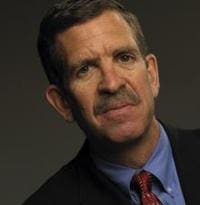
By Steven Willing, MD
I love studying the Bible because it conveys God’s plan and His compassion. We are in the new covenant with Christ. The Mosaic covenant ended. The law had a purpose. Human nature remains the same.

Editor’s Note: This is the second of four blog posts on Christians in healthcare.
Christians are needed for ethical reasons in healthcare. Boundaries are needed for the practice of healthcare. Hippocrates thought of this in the 4th century. Physicians were to do no harm. That included no abortions, no killing patients and no sexual interactions with patients. The early church encompassed the Hippocratic oath as healthcare evolved with the advent of hospitals and caring for the vulnerable. Christian Hippocratism grew. With technology, the bioethical issues have become boundless (pun intended), needing more boundaries.
I am an avid river rafter. My buddies and I came across two young rafters stranded on a rock in the middle of a grade 4+ rapid on the Owyhee River. We had three choices: leave them and continue rafting, go straight at them and put ourselves at risk or strategically tether ourselves to both shores to set up rescue lines. We chose the latter, which took hours. In healthcare, we must tether ourselves to truth. That is the role of bioethics. The source of truth is God since He is the Creator of all reality and all truth. If we try to rescue our patients and others who are stranded, trapped or enslaved to bad ideas in our culture without tethering ourselves, we put ourselves in danger.
Sometimes the moral or bioethical truth is simple, and sometimes it is complex, needing dialogue, research and investigation. In John 8, Jesus encounters the woman caught in adultery or sexual sin. After the crowd that was to stone her to death disperses, Jesus says “Stop it.” That’s my paraphrase of John 8:11b that says, “Neither do I condemn you; go, and from now on sin no more” (ESV). In modern healthcare we tend to say, “Practice safe sex so you do not get an STI or pregnant.” Other issues are more complex, such as vaccines, assisted reproductive technologies, end of life care, organ donation, genetics, artificial intelligence, addictions, care of the preborn and several more. Boundaries are needed for all these issues.
There is beauty in God’s created moral order. There is ugliness with distortion of God’s design or in the immoral world. God can be seen by observing the moral order, and sin can be seen by observing the immoral world. Louise Perry, known as a radical feminist, stated, “One of the reasons I ended up becoming a Christian is because I realized that if it were supernaturally true (differences between male and female) you would expect it to be sociologically true. And observing how sociologically true it is was very persuasive to me.” (From an interview with Peter Copeland of The Macdonald-Laurier Institute on the Inside Policy Talks podcast on September 11, 2025.) All truths, whether in biology, sociology, psychology or theology, are consistent with one another, since all truths are created and designed by God. With the desecration of God’s design, others see God and come to know Christ. That is true of those who have had sex rejecting procedures and pursue de-transitioning. Moral courage is contagious.
Immorality is an absence or perversion of God’s design. The gospel message is not bioethics or morality, but it leads to bioethics and morality. We desire to change by the Holy Spirit within us to overcome sin. Sharing truth about a bioethical issue is sharing about God’s design. God’s design gives us glimpses of His glory: in the beauty of creation, in marriage, in the womb, in science, in our bodies, in relationships and in salvation and sanctification. Although God is complex and mysterious, the gospel message is simple: the incarnation, life, death and resurrection of the Son of God. For those of us in healthcare, we have a unique opportunity to be a part of the church, of the kingdom of God, to be ambassadors of that kingdom and to help restore what is good.
What is your heart in sharing truth? Tim Keller said multiple times, “The gospel is good news, not good advice.” Bioethics establishes boundaries for living within God’s design, and it creates opportunities for us to share the gospel. Truth must be conveyed with compassion.
I love studying the Bible because it conveys God’s plan and His compassion. We are in the new covenant with Christ. The Mosaic covenant ended. The law had a purpose. Human nature remains the same. The Abrahamic covenant remains. We are saved through faith (Ephesians 2:8-9). The Davidic covenant remains. We have been promised a king and have an eternal King in Christ and can enter His kingdom (John 3:3,5). The law is a tutor. Bioethics is a tutor. Both are valuable in practicing healthcare. Bioethics sets the boundaries for the practice of healthcare to flourish according to God’s design. The Noahic promise stands. He will not destroy us in our sin. The gospel is true. All have the opportunity to believe and be saved. Forgiveness is essential in bioethics since we are all sinners. Prayer is essential, as is being filled with the Spirit as we continue in our struggles in this world of distorted truth. Light is brightest in darkness.
If there are no moral absolutes, then we are living “under the sun” as in Ecclesiastes. All is futile, but if there are moral absolutes, we have an ontological reality within creation and a teleological way to live for flourishing and glorifying God.
What's The Point?
- Do you struggle with how to convey biblical truth of morality and at the same time demonstrate compassion?
- How did Jesus do this so well?
- Are we responsible for the reaction or decisions of those who hear biblical truth of morality from us? Why or why not?
We encourage you to provide your thoughts and comments in the discussion forum below. All comments are moderated and not all comments will be posted. Please see our commenting guidelines.
Recent Articles





DISCUSSION FORUM
Join us for a vibrant conversation! This is a place to engage with others who see medicine not just as a profession, but as a calling — one that honors God, wrestles with real questions, and seeks truth with humility and purpose.