
The Point of Medicine
A FORUM OF CHRISTIAN MEDICAL & DENTAL ASSOCIATIONS®
The Future of Christian Medicine
March 31, 2026
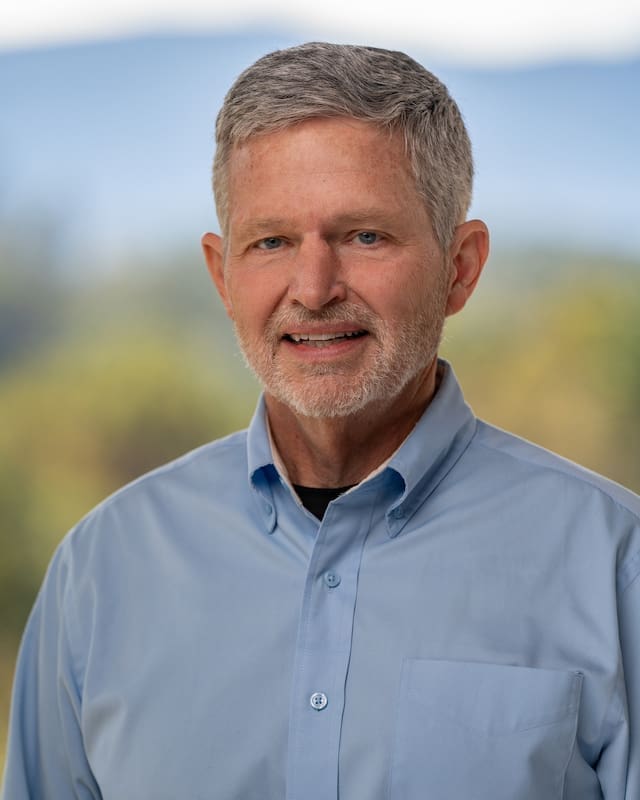
By Jeffrey Barrows, DO, MA (Bioethics)
The ability to think critically and deeply is crucial for Christian students in healthcare as they face ethical dilemmas that didn’t exist a generation ago. Should a Christian healthcare professional use a patient’s preferred pronouns if the patient identifies as a member of the opposite sex? What advice should they offer to parents of minors struggling with their sexual identity?

In his recent book The Anxious Generation, Jonathan Haidt highlights the growing epidemic of mental health issues among teenagers and young adults exposed to social media, not only in the United States but also in several Western countries flooded with modern technology that supports social media platforms. While the rise in mental illness among this population certainly deserves our attention, in this blog post, I want to focus on another harmful effect of technology on youth, also mentioned by Haidt, which is the loss of critical thinking. The use of computers, smartphones and social media has also been linked to increased fragmentation of attention, leading to a reduced capacity for deep, critical thinking. This point was earlier raised in 2010 by Nicholas Carr in The Shallows: What the Internet is Doing to Our Brains.
The ability to think critically and deeply is crucial for Christian students in healthcare as they face ethical dilemmas that didn’t exist a generation ago. Should a Christian healthcare professional use a patient’s preferred pronouns if the patient identifies as a member of the opposite sex? What advice should they offer to parents of minors struggling with their sexual identity? What about involvement with assisted suicide in a terminally ill patient in one of the 13 jurisdictions where it is now legal? Should a healthcare professional respect the autonomy of the patient requesting assisted suicide? If they feel uncomfortable with direct involvement, should they refer the patient to someone who will assist in the suicide? Christian mentoring is one solution to loss of critical thinking.
Critical thinking is vital for addressing ethical issues in healthcare, but our Christian healthcare students’ ability to engage in this deeper level of thinking is being hindered by excessive internet browsing and social media use. A recent article in the Financial Times reports a notable decline in reasoning and problem-solving skills among teenagers and young adults since 2014. Data analysis by the Times also shows increased difficulty in concentrating among 18-year-olds since 2010, along with challenges in learning new concepts during the same period.
I recognize healthcare students are often the best and brightest of their generation, but, with rare exception, the answers to these and other important ethical questions are either not addressed in healthcare education or framed within a secular worldview that emphasizes principles not in agreement with Scripture. This places the Christian healthcare student in a situation in which they either accept the secular ethical teaching or take the time and mental effort to engage in critical thinking to find an acceptable Christian answer. If the capacity for critical thinking is decreasing in this student generation, I am concerned more Christian healthcare students will simply default to the secular worldview.
This becomes even more concerning when we consider the decline in biblical literacy among Gen Z. According to the American Bible Society’s State of the Bible Report, only 36 percent of Gen Z adults read the Bible on their own at least three times a year in 2025, lower than any other generation. Thus, it’s not surprising that Barna and Impact 360 Institute data show that only 4 percent of Gen Z have a biblical worldview.
If only 4 percent of current healthcare students have a biblical worldview, they will need CMDA’s resources and mentoring more than ever to stay strong in their faith and witness to their colleagues. They are not only a minority but are also increasingly viewed negatively by our culture, as Aaron Renn explains in his book Life in the Negative World. This suggests that the number of Christian healthcare students experiencing persecution will likely grow, making it harder for them to practice healthcare according to their Christian conscience.
Our Christian healthcare students should be made aware of this potential reality in a way that motivates them to learn about biblical healthcare and prepare to face tough decisions in their practice. Standing Strong in Training is a curriculum from CMDA that offers a solid starting point, but ongoing mentorship will be vital to developing strong Christian disciples in healthcare who can serve as salt and light in the increasingly dark world of modern healthcare.
Admittedly, these survey statistics and cultural observations concern and discourage me, but I also recognize God is sovereign. He is not unaware of our situation and is still in control. Here in the U.S., we may be entering the era predicted by Paul in his second letter to Timothy:
“But understand this, that in the last days there will come times of difficulty. For people will be lovers of self, lovers of money, proud, arrogant, abusive, disobedient to their parents, ungrateful, unholy, heartless, unappeasable, slanderous, without self-control, brutal, not loving good, treacherous, reckless, swollen with conceit, lovers of pleasure rather than lovers of God” (2 Timothy 3:1-4 ESV).
I also remember the words of James, urging us to view trials with joy, for it is through trials that we develop perseverance and mature as followers of Jesus. Trials are a part of the long history of the Christian church, and even in the example of our Lord, they separate true Christians from the cultural Christians among us.
Therefore, let us not give up or become discouraged. The Lord is in control, and He has plans for each of us (Ephesians 2:10). For Christian healthcare professionals near training institutions, mentoring this new generation of Christian healthcare students is essential to help this vital 4 percent minority preserve their faith and biblical worldview. Otherwise, they risk drowning in the sea of progressive modern medicine, losing their Christian values and becoming overwhelmed by the world. If you are not familiar with the CMDA Mentoring Commission, you can find more information here. If you would like to learn more about mentoring, consider enrolling in the CMDA Mentoring Academy here. I believe you will find investing a little of your time in this next generation will be well worth the effort.
After all, the future of Christian medicine depends on them.
What's The Point?
- Are you mentoring a student, resident or young healthcare professional? If yes, do you address the issue of critical thinking and the harms of social media? If not, what is keeping you from mentoring?
- How can CMDA enhance a biblical worldview in medicine and in our culture?
- Do you have a story of how someone mentored you?
We encourage you to provide your thoughts and comments in the discussion forum below. All comments are moderated and not all comments will be posted. Please see our commenting guidelines.
Recent Articles


DISCUSSION FORUM
Join us for a vibrant conversation! This is a place to engage with others who see medicine not just as a profession, but as a calling — one that honors God, wrestles with real questions, and seeks truth with humility and purpose.