
The Point of Medicine
A FORUM OF CHRISTIAN MEDICAL & DENTAL ASSOCIATIONS®
Image Bearers with Down Syndrome
July 7, 2026
By Kayla Grooters, MD
The scientific method assumes the natural world is ordered and functions in an organized manner. Rigorous hypothesis testing yields scientific truth. As Christian scientists, we believe God is truth (John 14:6) and that God has created an ordered world (Genesis 1:1-3 and John 1:1-3).
It was the beginning of hand off. An early evening on a cold January day, it was my first night shift on my OB/Gyn rotation. I nudged my way to the back of the work room, close enough to the attending to hear and yet far enough away to give the residents space. I resisted fidgeting with my ill-fitting surgical scrubs and turned my attention to the wall of fetal monitors. About 10 women were on the labor ward that night, most of them in the early stages.
Just as I was preparing for the attending to pimp me of the fetal tracing classifications, a pager went off. The resident I was assigned to answered it. I listened as she repeated the report: “G5P4, arrived via self-transport 20 minutes ago. Currently in a triage. 10 cm.” She slammed down the phone and started to run for the door. It was go time. I grabbed my stethoscope and sprinted off behind her. I wasn’t sure if I would need it, but I sure did not want to be caught without it. I had never attended a delivery before, and I was not about to miss the opportunity.
We made it into the triage ward in less than 30 seconds. The nurses had already set out materials and were busy detaching the end of the bed. Mom sat upright with her hands wrapped around her knees, grimacing. Another woman, a teenager daughter, sat beside her, holding her hand. In the time it took me to get oriented to the room and introduce myself, my resident had already gowned up and took a seat on a stool at the end of the bed.
“Okay, looks like baby is already crowning. Just a few deep breathes.” She instructed mom, before turning her head toward the nurse. “Someone make sure the peds resident is here. Known DS.”
I didn’t have time to process what she was saying before mom started to push. With less than three strong pushes, out came baby girl with a gush. I waited axiously as the resident lifted up the tiny pink ball. The silence couldn’t have been more than a few seconds, and yet it agonizingly dragged on. Finally, a cry. Cheers erupted. “My God,” I uttered behind my mask. I hadn’t realized I had been holding my breath.
The resident laid baby girl onto mom’s chest.
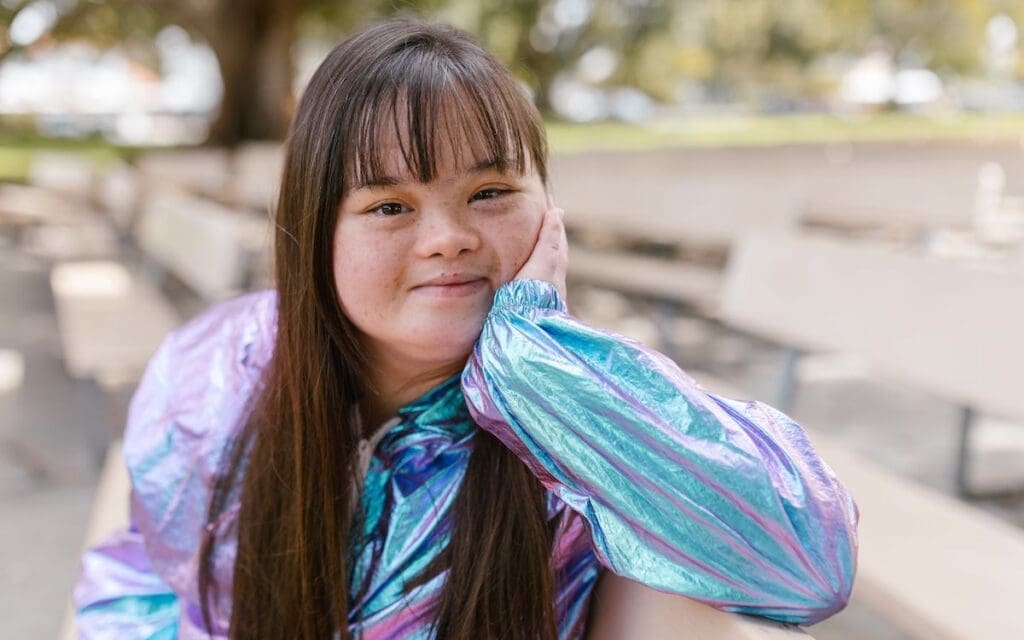
“Come on, get some towels.” The nurses’ instructions snapped me back into reality. Medical student mode reactivated. I started to look over the little one’s features, her small, creased hands and broad flat face. The resident’s words came back to mind: “Known DS.” Down syndrome.
I brought a towel over to mom and laid it over baby. Mom was staring at those little slanted eyes, tears forming in her own. I didn’t know what to say. She did: “She’s just like my others.”
She was, wasn’t she? An extra chromosome didn’t change her humanity; instead, it just helped describe it. By now, the pediatric resident had arrived. He introduced himself to mom before asking permission to examine the baby girl. Gently, he pressed his stethoscope against her back and listened. “Are you the medical student?” He asked me as he worked. I nodded. “Take a listen. What are we worried about in infants with Down Syndrome?”
I knew I had brought my stethoscope for some reason. I placed the diaphragm right where he had placed his. “Heart defects. ASD, VSD.” I answered, before concentrating on the steady lubs and dubs of a tiny heart. “I don’t hear anything unusual.”
The resident smiled. “Neither do I.” He looked back at mom. “Your daughter’s heart sounds healthy. But for the student here,” The resident nodded back in my direction, “what would we have done if we had heard something?”
I hesitated, thinking: “Call cardiology?”
The senior chuckled, “Yes, definitely. Check vitals, get an echo, consider surgical intervention.”
He went on to explain the rest of the exam, including all the various anomalies his team would look for and how they would handle them. Before he stepped away, he went to give mom another handshake, “Congratulations. You have a beautiful child.”
Mom smiled, “I know.”
This is a knowledge Jesse and Ashley Ridgway will never get to experience. In early June 2026, the popular YouTube personality and his wife announced to their 4.3 million followers that they aborted their son after a prenatal Down Syndrome diagnosis. Their son now joins the roughly 67 percent of children who are aborted following a positive non-invasive prenatal test and/or amniocentesis for the condition in the United States alone (Natoli et al, 2012). For many on social media, this tragedy revealed an uncomfortable truth. Eugenics, “the practice or advocacy of controlled selective breeding of human populations (as by sterilization) to improve the populations’ genetic composition” (Merriam-Webster, n.d.), and, once thought to be an archaic ruin of the past, is alive and well in the hands of the abortion industry. Even for those with generally pro-choice sentiments, the blatant admission that a millionaire couple killed their child in the second trimester solely because of a Down Syndrome diagnosis enflamed outrage.
In one of Mr. Ridgway’s initial X posts, he explained his supposed rationale. “50% of babies with DS have heart defects. 75% will have hearing challenges. Over 50% will have vision problems. Impaired immune function, developmental disabilities, learning disabilities, delayed physical development, poor muscle tone, structural issues with face, decreased lifespan.” He went on to say, “Down Syndrome isn’t a ‘blessing,’ it is objectively sh***y from a health perspective” (Ridgway, 2026).
I can confidently say the first part of Mr. Ridgway’s response would have satisfied the pediatric senior I worked with that January when he asked me what we worry about in infants with Down Syndrome. Mr. Ridgway, however, conveniently forgot the next part: treatment. As my senior told the mom, hearts can be repaired. Hearing augmentation can be considered. Muscles can be strengthened, immune systems can be supported and early interventions can open the door for children with Down Syndrome to thrive intellectually, emotionally and spiritually.
In the year 1900, the average life expectancy for a person with Down Syndrome was nine years. Today, it is nearly 60 (Chicoine, 2025). This massive shift is largely due to the widespread availability of corrective heart surgery and the impact of general health management. Unsurprisingly, when society started to care for these people as we would any other child, their health and longevity skyrocketed.
Today, adults with Down Syndrome continue to show us what they are capable of. They have graduated college, pursued technical school and worked in restaurants, retail, factories, farms and fashion runways. They have become athletes, business owners, church members and religious sisters. As healthcare professionals, we are witnesses to the miraculous strides made by individuals in the Down Syndrome community when they receive love and support. As Christians, we recognize these people, like any others, are fearfully and wonderfully made (Psalm 139:14). Through Christ, they have been created to do good works, which God prepared in advance (Ephesians 2:10), no matter their physical or intellectual ability.
Yet, tragically, the Ridgway’s child will do none of these things. For Mr. and Mrs. Ridgway, the mere possibility of health complications warranted the killing of a son they claimed they had wanted. Following up on his early post, Mr. Ridgeway wrote, “We are excited to try again in the future and hopefully have a better outcome” (Ridgway, 2026). The statement summarizes the ethos of a world where children are a commodity, and parents, who later vow to defend and protect their children at all cost, can destroy them in the womb should them not meet the required specifications.
My question for Mr. Ridgway is this: What would you have done if your child had received the diagnosis of Down Syndrome, or any other diagnosis for that matter, at birth?
As a soon to be internal medicine/pediatrics intern, I can tell you what we would have done. When your wife arrived to our hospital in labor, we would have run down the hall as fast as we could. When your baby was delivered, we would have anxiously anticipated that first cry, resuscitation equipment in hand should he need them. If we saw any features that your baby was at risk, we would have examined him thoroughly and stopped at nothing to save his life. And when you saw him, you would have known in your heart that he was just like any other.
References
Chicoine, B. (2025, January 14). Life expectancy, aging, and the Down syndrome population. Adult Down Syndrome Center. https://adultdownsyndrome.org/resources/life-expectancy-aging/
Merriam-Webster. (n.d.). Eugenics. In Merriam-Webster.com dictionary. Retrieved June 12, 2026, from https://www.merriam-webster.com/dictionary/eugenics
Natoli, J. L., Ackerman, D. L., McDermott, S., & Edwards, J. G. (2012). Prenatal diagnosis of Down syndrome: A systematic review of termination rates (1995–2011). Prenatal Diagnosis, 32(2), 142–153. https://doi.org/10.1002/pd.2910
Ridgway, J. [@McJuggerNuggets]. (2026, June 1). As for us, we made a difficult decision that we believe in the long-run will be beneficial for our family. Thankfully, we had a choice. It will take a little time to move on, but we are excited to try again in the future and hopefully have a better outcome. [Post]. X. https://x.com/McJuggerNuggets/status/[POST_ID]
What's The Point?
- How significant is the difference of genetic screening versus genetic diagnosis?
- Is there any role for Preimplantation Genetic Diagnosis (PGD) in healthcare?
- Why does our culture believe children are disposable?
- Has caring for a child with disability been a part of your life? What has it taught you?
We encourage you to provide your thoughts and comments in the discussion forum below. All comments are moderated and not all comments will be posted. Please see our commenting guidelines.
Recent Articles


DISCUSSION FORUM
Join us for a vibrant conversation! This is a place to engage with others who see medicine not just as a profession, but as a calling — one that honors God, wrestles with real questions, and seeks truth with humility and purpose.