
The Point of Medicine
A FORUM OF CHRISTIAN MEDICAL & DENTAL ASSOCIATIONS®
Who I Am, In Medicine and Beyond: Pro-Love and Pro-Life
May 12, 2026
By Alwyn Rapose, MD, FACP, FIDSA
The pandemic also opened my eyes to the frailty of life and the limitations of modern medicine. It led me to a deeper relationship with God for myself and my patients. I was reminded again patients are more than a body with a condition that needs to be treated, but my patient has a spirit that is reaching out for something higher.

*This article was originally published in the Winter 2025 edition of Worcester Medicine a quarterly publication of the Worcester District Medical Society.
My personal journey through the once in-a-lifetime COVID pandemic brought back my passion for painting—a hobby I had from a young age, that got quashed by the hours dedicated to learning from thousands of chapters of textbooks in medical school. I previously painted nature scenes, portraits and still lifes. During COVID, however, I painted on stones “I Love You” messages to my wife, painted logs of wood and wine bottles (empty, of course) decorating a small patch in my garden…it helped me get through some of the darkest times of my medical career.
The pandemic also opened my eyes to the frailty of life and the limitations of modern medicine. It led me to a deeper relationship with God for myself and my patients. I was reminded again patients are more than a body with a condition that needs to be treated, but my patient has a spirit that is reaching out for something higher. I have started praying with my patients, and the joy has been mutual. On more than a few occasions, as I leave the room, I have had patients say to me, “Doctor, you forgot something.” Then, I look to see—did I leave my notes on the patient bed? Did I drop my stethoscope? Then, they say, “You forgot to say a prayer.” One patient put me on a video call with family members in another state as we prayed; some have asked me to pray for their families. These experiences have convinced me I can no longer be one type of person at work and another “outside of medicine.” The same God I reached out to in my darkest COVID times and who I worship on Sundays, wants to be a part of my life when I am at my job too.
The importance of this integration of medicine and religion is not a new discovery or something that needs to be kept under cover. On the contrary, I suggest it is a requirement for balance in our lives and our medical practice.
According to Martin Luther King, Jr., “Science investigates, religion interprets. Science gives man knowledge, which is power; religion gives man wisdom, which is control. Science deals mainly with facts, religion deals mainly with values. The two are not rivals. They are complementary.”
In other words, Martin Luther King Jr. believed that while science provides knowledge and power, it needs a moral compass, which he associated with religion. He believed religion was the key to avoiding misuse and ensuring medical progress benefits all. Dr. King also emphasized scientific advancements must be accompanied by spiritual growth to address the poverty of the spirit that can accompany technological abundance.
Another similar view on medical morality is shared by a 17th-century French mathematician and physicist who authored “Pascal’s Principle”, Blaise Pascal: “Knowledge of physical science will not console me for ignorance of morality in time of affliction, but knowledge of morality will always console me for ignorance of physical science.”
Pascal believed that while scientific knowledge is valuable, it is insufficient to provide the meaning and guidance needed for living a fulfilling life. He argued that morality and faith, experienced through the “heart” rather than reason, are crucial for understanding the human condition and finding solace in suffering. As a result, Pascal emphasized the importance of morality and faith in guiding human actions and providing a framework for understanding the world.
A more contemporary quote I would like to share is from Monsignor Peter Beaulieu, a priest from the Diocese of Worcester with graduate degrees in moral philosophy and clinical ethics: “In Catholic thought, there are absolute prohibitions against the direct taking of human life. Using medical knowledge and diagnostic tests resulting in over-enthusiastic interventions contrary to moral principles like abortion or the under-treatment of the elderly, the mentally challenged and other vulnerable populations can be confronted with rediscovering the patient as a person, created in God’s image. Traditional medicine, centered around the Hippocratic Oath, prioritizes the well-being of the patient. Moreover, the centuries-old philosophy of healthcare recognizes that care’s holistic (or wholistic) nature—the patient as person composed of body, mind and spirit or soul.”
All the major religions of the world condemn the taking of an innocent human life. Science establishes beyond doubt that it is a human life that begins at conception, and abortion ends that life. Similarly, physician-assisted suicide is the taking of a human life, irrespective of changes in terminology to make it more palatable. So, I spend a lot of my time outside of medicine on these two issues gnawing at my conscience, issues that are front and center in our social and medical discourse today. I support local pregnancy resource centers that help women with crisis pregnancies, I march in support of the unborn, and I am working with groups active against legislation supporting physician-assisted suicide.
I hope that my message challenges our membership as we thread the balance of science and morality in our own medical practice and who we are outside of medicine. May we all stand up for the most vulnerable at all stages of life and work together to create a “Pro-Love” society.
May God bless America.
About the author:
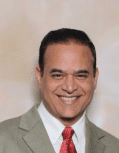 Alwyn Rapose, MD, FACP, FIDSA
Assistant Professor, UMass Chan Medical School
Chief, Division of Infectious Diseases, Reliant Medical Group
President, Worcester District Medical Society
CMDA Lifetime Member
What's The Point?
- What are the limits of modern medicine in caring for patients?
- Can modern medicine help patients beyond science with transcendence?
- Our culture compartmentalizes faith and science. Can medicine truly succeed this way? Have you compartmentalized your practice and profession this way? How can we overcome that compartmentalization?
We encourage you to provide your thoughts and comments in the discussion forum below. All comments are moderated and not all comments will be posted. Please see our commenting guidelines.

Recent Articles


DISCUSSION FORUM
Join us for a vibrant conversation! This is a place to engage with others who see medicine not just as a profession, but as a calling — one that honors God, wrestles with real questions, and seeks truth with humility and purpose.