
The Point of Medicine
A FORUM OF CHRISTIAN MEDICAL & DENTAL ASSOCIATIONS®
Beyond the Front Lines: Medicine Sees Image Bearers, Not Enemies
August 4, 2026
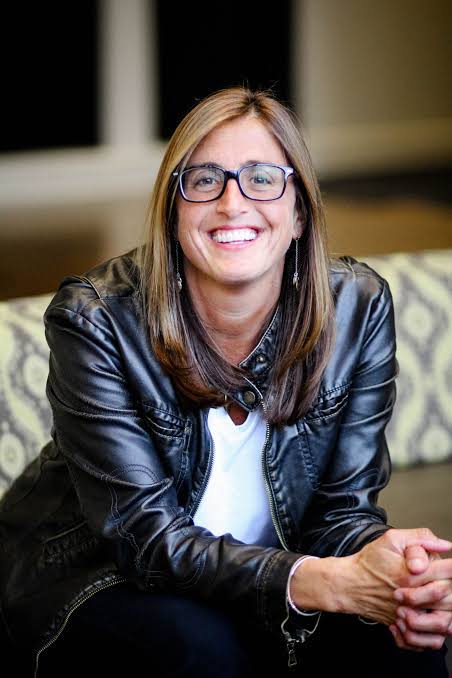
By Lina AbuJamra, MD
Our ministry serves through a community center in Lebanon's Beqaa Valley, in an area long known as a Hezbollah stronghold. Many of the families who come through our doors have been directly affected by the ongoing conflict. They have lost homes, jobs, and loved ones. They carry the visible wounds of war, but even more often, they carry the invisible ones.

The first question people ask when I return from Lebanon isn’t about medicine.
It’s about the war.
“Was it safe?”
“Weren’t you afraid?”
“How could you go there now?”
They’re understandable questions. Southern Lebanon and the Beqaa Valley have become synonymous with headlines about rockets, airstrikes, Hezbollah, and Israel. The images we see on television naturally divide people into categories: allies and enemies, victims and aggressors, good and bad.
War has a way of reducing human beings to sides.
Medicine does the opposite.
Our ministry serves through a community center in Lebanon’s Beqaa Valley, in an area long known as a Hezbollah stronghold. Many of the families who come through our doors have been directly affected by the ongoing conflict. They have lost homes, jobs, and loved ones. They carry the visible wounds of war, but even more often, they carry the invisible ones.
When patients walk into our clinic, we don’t begin by asking who they support politically. We don’t ask which side of a border they live on or what ideology they hold. We ask where it hurts.
That is the remarkable gift of medicine.
In the exam room, politics gives way to humanity.
Every patient has a heartbeat. Every mother worries about her child. Every elderly man hopes his pain can be relieved. Every frightened parent wants reassurance that their child will be okay.
Those realities transcend every border ever drawn.
As Christian physicians, this should not surprise us. Scripture tells us that every person is made in the image of God (Genesis 1:27). That truth existed long before any modern nation, political movement, or military conflict. It is the most fundamental identity every human being possesses.
Medicine gives us the privilege of responding to that identity.
Jesus modeled this repeatedly. He ministered across ethnic, religious, and political boundaries that others considered untouchable. He spoke with Samaritans. He healed the servant of a Roman centurion. He touched lepers. He refused to let cultural divisions determine who was worthy of compassion.
His followers should do the same.
This does not require us to ignore evil or pretend that injustice doesn’t matter. Wars involve real suffering, difficult moral questions, and heartbreaking loss. Christians may disagree about politics while grieving the devastation conflict leaves behind.
But in the clinic, another reality takes center stage.
The patient before us is someone Christ loves.
I have been reminded of this over and over again in Lebanon. Sitting across from patients whose backgrounds are vastly different from mine, I am struck by how quickly labels fade. Fear looks the same in every language. Tears require no interpreter. Relief after receiving compassionate care is universally understood.
Medicine has a unique ability to restore what conflict often steals: the recognition of another person’s humanity.
Perhaps this is why the ministry of healing has always occupied such an important place in Christian witness. Every time we treat a patient with dignity, we quietly declare something the world desperately needs to hear: your value is not determined by your nationality, your politics, or the side of a conflict you happen to inhabit. Your value comes from the God whose image you bear.
That perspective changes us as physicians as well.
It guards us from cynicism.
It protects us from allowing cultural narratives to define how we view the people before us.
It reminds us that our primary citizenship is in the Kingdom of God before it is anywhere else.
The exam room becomes holy ground because it is one of the few places where enemies can once again become neighbors.
The Good Samaritan understood this. The hero of Jesus’ story crossed every social and ethnic boundary to care for a wounded stranger. He did not first determine whether the injured man deserved compassion. Mercy came before agreement.
Perhaps that is one reason Jesus chose that story.
The world naturally asks, “Whose side are you on?”
The gospel asks, “Who is my neighbor?”
For Christian physicians serving in places marked by conflict, that question shapes every encounter. We do not heal because people think like us. We do not serve because they share our worldview. We care for them because they bear the image of the God who created them.
Long after ceasefires are negotiated and borders are debated, that calling remains.
And perhaps that is the point of medicine.
Medicine reminds a divided world that before we were citizens of nations or participants in conflicts, we were human beings created in the image of God. Every patient who enters our exam room deserves to be seen that way.
What's The Point?
- We can place ourselves at risk by practicing medicine in an area of conflict or disease. Lebanon is one of many areas such as Haiti, Ukraine, northern Nigeria, and countries with Ebola virus. How do we set boundaries or guidelines for inviting colleagues or medical students?
- How do we overcome our desire for a “comfortable” medical practice, and take risks that require us to pray and trust God?
- How do we answer the question, “Who is my neighbor?”
We encourage you to provide your thoughts and comments in the discussion forum below. All comments are moderated and not all comments will be posted. Please see our commenting guidelines.


DISCUSSION FORUM
Join us for a vibrant conversation! This is a place to engage with others who see medicine not just as a profession, but as a calling — one that honors God, wrestles with real questions, and seeks truth with humility and purpose.
Excellent blog post and message written by Dr. Lina AbuJamra! Thank you!